In this article
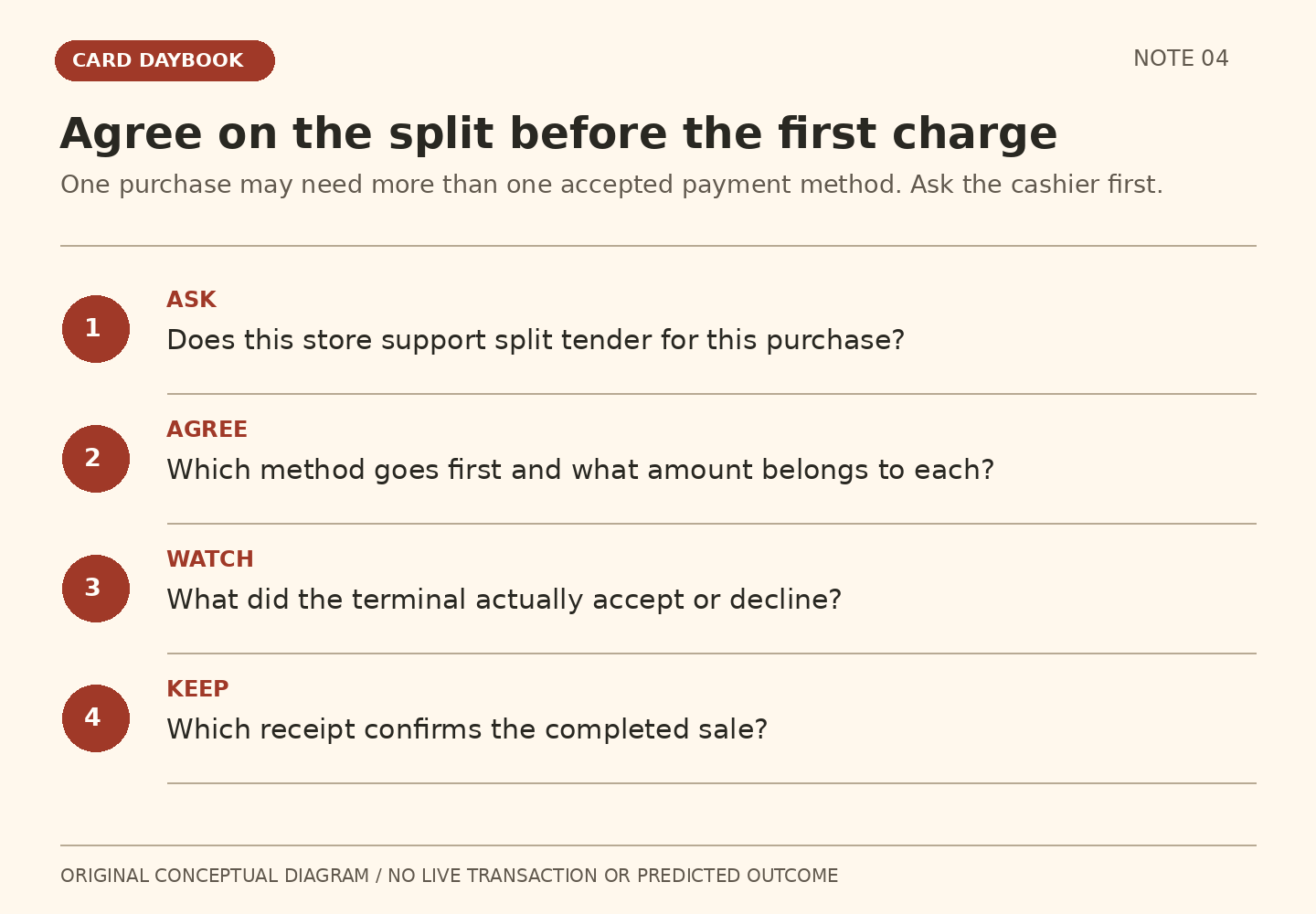
Split tender means paying for one purchase with more than one payment method. It is easiest when the cashier knows the plan before the first charge. Saying what you want to put on a card, and asking whether the store can do it, is clearer than hoping the register will automatically discover an appropriate split.
A publicly available Wisely Pay cardholder agreement describes split transactions as potentially available and says some merchants do not allow them. This is a scoped Pay example, not a promise for every Wisely program, retailer or online checkout.
Set the purchase total first
Luis, a fictional shopper, is buying household goods. He wants to use a chosen portion of his prepaid balance and another method for the rest. He waits until the cashier has applied the intended discounts and confirmed the full purchase total, then asks whether the register supports his proposed split.
This sequence avoids agreeing on portions before the amount is settled. If an item is removed or a discount changes the total, revise the plan before presenting payment. The cashier should not have to guess whether a changed total alters the amount you want charged to the first method.
Choose an amount using information you can verify privately. Do not announce your entire account balance or ask the cashier to inspect your phone. A requested portion is a payment instruction; it does not need to become a public account discussion.
Confirm which step happens first
Ask the cashier how the store wants to process the methods. Different registers may require a particular order or may not support the proposed combination. Follow the merchant’s actual process rather than a remembered technique from another store.
Before the first submission, confirm the portion shown on the screen. After that step, ask what remains due. Read the next amount before authorizing the second payment. You are checking a single purchase whose parts should fit together, not approving two unrelated totals.
In the example, Luis repeats the amount he wants on the prepaid card and asks the cashier to confirm it. The cashier then shows the remaining portion. Luis does not assume the register will automatically stop at the exact balance on his card, because that was never established.
Discuss the awkward middle
The important contingency is what happens if the first portion succeeds and the second does not. Ask how the merchant would handle an unfinished purchase. This is especially useful when your alternative method has its own restrictions or when the combination is unfamiliar to the cashier.
If the second payment fails, pause. Determine whether the store can suspend the sale, accept a different remaining payment or reverse the first portion under its process. Do not walk away assuming an incomplete sale has erased everything already submitted.
Keep any cancellation, reversal or correction record the merchant provides. The name of the document matters less than what it confirms: which portion was affected and what action the store completed. A merchant’s confirmation does not create an instant account-availability guarantee.
Inspect the final receipt as a whole
- The merchandise total should match the purchase you agreed to complete
- Each payment portion should be identifiable without recording full card credentials
- The portions should account for the complete total, including any cash back or separately disclosed charge that actually applies
- Any canceled attempt should have its own explanation or supporting record
If the receipt does not show enough detail, ask for the relevant payment slips or a reprint while staff can still find the transaction. Keep the records together. A slip for one portion alone can be confusing when you later compare it with the price of the whole basket.
Keep a changed basket from breaking the agreement
If the cashier changes the purchase after the first payment portion has been submitted, pause to establish the revised total and how the store will handle the portion already recorded. Do not silently recalculate the remainder while the register is following a different process.
For Luis, an unavailable item could reduce the intended purchase. His next question is whether the store can adjust the sale while preserving the first portion or whether it needs to undo and restart part of the transaction. He lets the cashier explain the supported process before presenting the second payment.
This is also why a requested card portion should be explicit. “Use what is left” is unclear unless the cashier knows exactly what you mean and the terminal supports it. Naming the intended portion avoids relying on an automatic balance lookup or an assumed partial approval.
Separate payment portions from ownership of the goods
If another person pays part of the purchase, agree privately who is covering what before reaching the register. The store’s receipt may show payment methods without explaining your household arrangement. Keep that personal agreement separate from the merchant’s payment record.
Do not hand over another person’s card or credentials without their authorization. If the other payer is present, each person can complete their own authorized step. If they are absent, ask the merchant what legitimate arrangement it supports rather than improvising with a photograph of a card.
Recognize a clean stop
When the proposed combination is unsupported, the cleanest stopping point is before the first charge. You can choose a smaller basket, use one supported method or postpone the purchase. None of those decisions requires explaining private account details to the people waiting behind you.
If the sequence has already started, a clean stop requires knowing what the merchant did with the completed portion. Ask for the record of any correction and whether merchandise was actually released. Avoid calling the whole purchase canceled when the store has confirmed only that the second payment failed.
Later, compare the documents as one story: the intended basket, the submitted portions and the final merchant outcome. If a part is missing, ask about that part rather than presenting every attempt as a completed charge. The method is useful precisely because it does not require you to guess what an unseen payment system did.
Ask about a return before it becomes urgent
If an item may be returned, ask how the store handles refunds on a split purchase. Do not assume you can choose a different refund destination later. Save the original receipt so the store can identify the methods used and explain its applicable return process.
Luis’s successful outcome is not merely “the card worked.” He has a completed purchase, agreed payment portions and a receipt that connects them. If the store cannot support the split, he can change the basket or payment plan before beginning. This independent guide does not set card limits or verify any reader’s balance.
Sources and limits
Public sources support the specific statements identified in this note. Questions, fictional situations and conceptual diagrams are original editorial work. Check your own card agreement and the merchant’s current terms; this publication does not verify a real account or promise an outcome.
- Wisely Pay public cardholder agreement: split transactions example · checked October 13, 2026