In this article
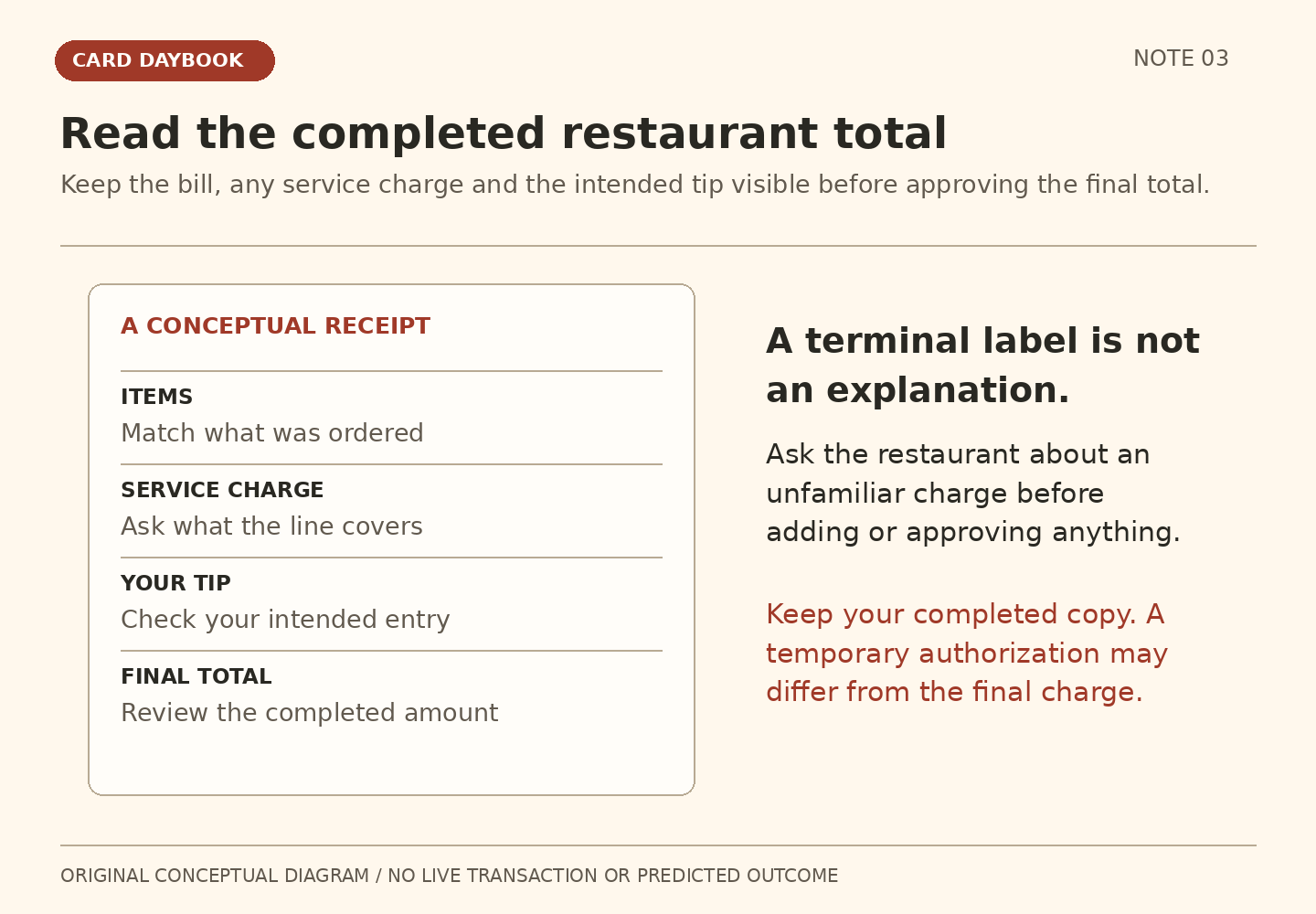
The easiest restaurant payment question to resolve is the one you notice while the bill and the person who presented it are still in front of you. Look at the itemized total, any added charge and the tip you intend to leave before completing the card payment. Your goal is a clear record of your choice, not an assumed tipping formula.
Wisely’s restaurant authorization explanation says a restaurant may request additional authorization for a tip. That can make the temporary amount differ from the completed purchase. The FAQ does not establish a universal tip percentage or hold duration for every transaction.
Read added charges before the tip prompt
Priya, a fictional diner, notices a service charge on the itemized bill. The terminal still offers tip choices. Instead of assuming the charge’s purpose, she asks what it covers and whether gratuity is already included. The answer helps her decide what additional amount, if any, she wants to authorize.
This article does not decide what a diner should tip or how a restaurant distributes charges to staff. Those are different questions. At checkout, the immediate task is to understand the total being presented and avoid submitting an amount based on a mistaken reading of the bill.
If a menu, posted policy and receipt appear inconsistent, ask the restaurant to explain the difference before payment. Keep the conversation specific: identify the line you do not understand. A general complaint about the total is harder to resolve than a question about a particular charge.
Make the intended total legible
On a paper slip, check that the tip entry and final total agree with your intention. Follow the restaurant’s process for correcting an entry rather than leaving ambiguous marks. On a payment screen, read the complete total after making a selection and before submitting it. An unfamiliar layout deserves a pause.
If you leave a cash tip, ensure the card-payment record reflects the card amount you intended. Keep your own note that the gratuity was handled separately if that helps you later. Do not expect the appearance of a cash tip to explain an unclear card total automatically.
A digital receipt can be useful, but consider whether you want to provide the contact information requested to receive it. Ask whether a paper receipt is available. The important evidence is a readable completed purchase record, not signing up for restaurant marketing to obtain one.
Split meals need agreed portions
When dining with others, resolve the allocation before cards are collected. Clarify whether the restaurant can separate items, divide the total or accept a specified amount from each person. Also agree how any included service charge and additional tip will be handled. Do not assume the restaurant can reconstruct a private arrangement among diners.
Priya’s companion pays a separate portion in this example. Priya checks the receipt for her own portion rather than comparing her card activity with the total for the entire table. Each payer retains their own payment record. This keeps an allocation question from turning into an unfounded duplicate-charge concern.
Compare a completed payment with the right evidence
Later, use the final receipt to compare the merchant’s completed card amount with the amount you authorized. Keep the itemized bill if it explains the service charge or allocation. A memory of the menu price alone is not enough to account for the full purchase.
If something does not match, describe the difference to the restaurant using the purchase date and receipt reference. Ask for an explanation or correction record. Avoid asserting that a temporary amount proves an improper tip adjustment; establish what the merchant actually completed.
For an account entry you believe is incorrect, Wisely’s transaction-error guidance directs cardholders to customer service. Do not postpone reporting suspected unauthorized activity while trying to perfect a restaurant receipt file.
Resolve a corrected bill before completing a second payment
If the restaurant finds an error before you leave, ask whether the first payment attempt was completed and how the correction will be recorded. A fresh receipt should explain the corrected purchase; it should not leave you guessing whether the earlier slip still represents a charge.
For Priya, this could mean noticing an item belonging to another table. She asks the restaurant to correct the itemized bill and present the payment total again. She then makes her tip choice against the corrected bill, rather than copying an earlier total without checking it.
Keep the original and corrected slips together until the account outcome is clear. Label the original as the record being questioned, not as something to forget simply because staff printed another copy. If a restaurant promises to correct an amount later, ask what it will correct and keep that explanation.
A helpful follow-up states the purchase date, the receipt reference and the difference between the intended total and the completed amount. It does not require naming or accusing an individual employee. The payment record is the starting evidence; the cause remains a question until someone can establish it.
Keep the evidence proportionate
You usually need the itemized bill, your payment receipt and any response about a correction. You do not need to record the server’s personal information or collect other diners’ account details. A short note explaining a separately paid tip or divided bill can supply the missing context.
The practical finish is modest: the receipt accurately represents the meal you paid for and the amount you chose to authorize. Card Daybook cannot see or adjust a transaction. Its role is to help you preserve a clear purchase record without treating a restaurant’s payment process as identical to every other merchant’s.
Sources and limits
Public sources support the specific statements identified in this note. Questions, fictional situations and conceptual diagrams are original editorial work. Check your own card agreement and the merchant’s current terms; this publication does not verify a real account or promise an outcome.
- What is a pre-authorization hold? · checked October 13, 2026
- What do I do if I have a question or think there is an error with a transaction on my card? · checked October 13, 2026